What Can a Grocery Cart Teach a 3-Year-Old Bangalore Preschooler?
There’s a special kind of magic that happens when young children step outside their classrooms and into the real world. A trip to the local pharmacy isn’t just an outing – it’s a chance to ask, “Why are medicines stored here?” or “How does a thermometer work?”
Similarly, a visit to the supermarket transforms into a lesson in math (“Let’s count these apples!”), vocabulary (“This is called an eggplant!”), and life skills (“We pay money to buy food”).
Why?
A child asks over 300 questions a day
Inquiry‑based learning begins with a question – and in early childhood, questions are everywhere.
A supermarket aisle becomes a math and vocabulary classroom
It’s About Creating a Rich Exploration Environment
Open‑ended environments, like a visit to a supermarket, allow children to connect classroom concepts to real‑life examples. They count fruits, identify colors, learn about money, and see how adults work and interact. It turns abstract ideas into meaningful learning.
A visit to the pharmacy opens their eyes to how communities care for one another. Children ask, “Why do we need medicine?” or “What does a pharmacist do?” These visits become launchpads for projects, stories, and critical conversations.
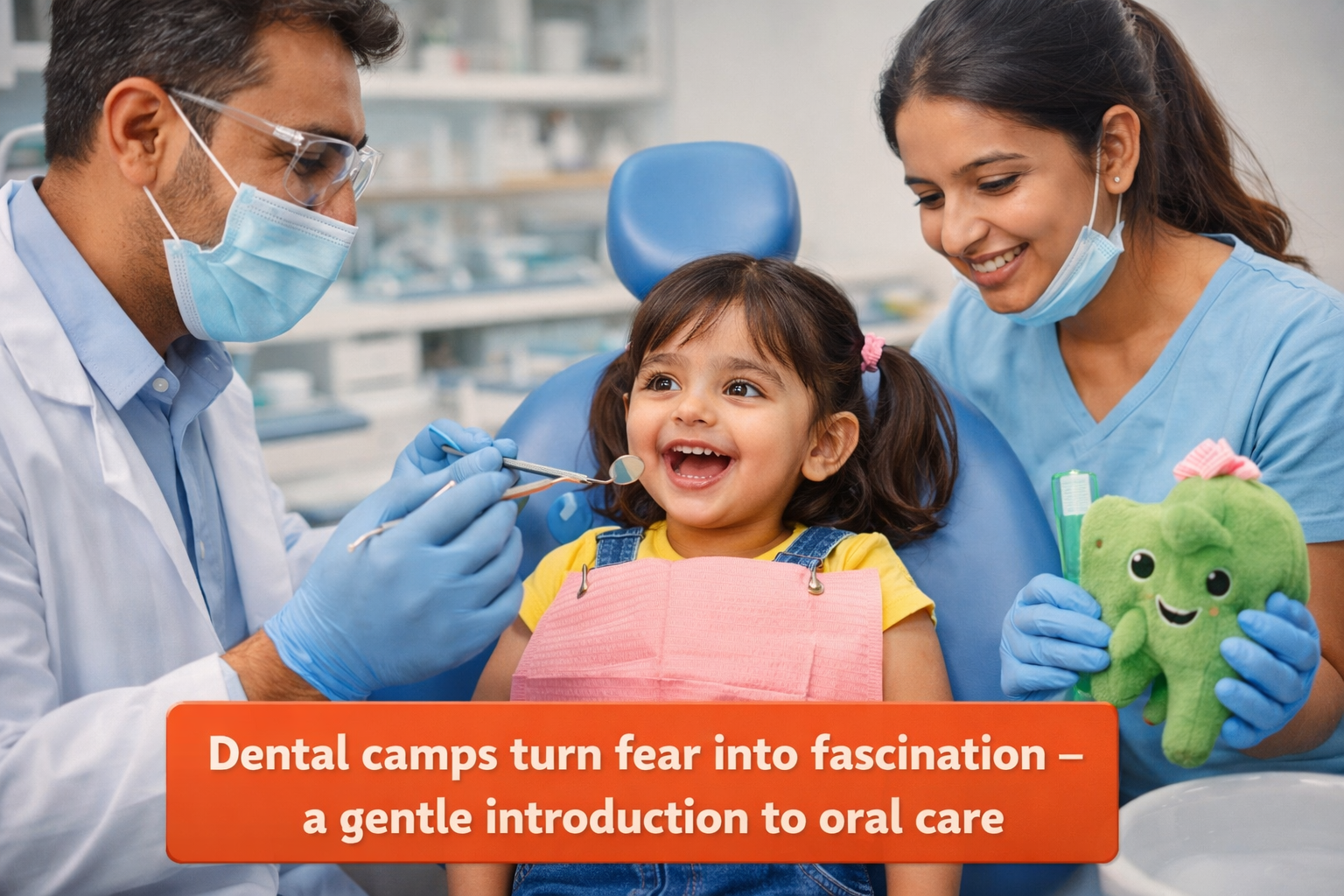
Then there’s the dentist – a place that often feels scary to children. That’s why introducing dental care early, through child‑friendly dental camps, is so powerful. When toddlers meet a gentle dentist outside of a clinical setting, fear is replaced with fascination when the dentist holds a mirror and examines a model tooth.
These simple yet intentional experiences help children develop confidence, emotional awareness, and curiosity. They learn that it’s okay to ask questions, to explore, and to try again. That’s the foundation of inquiry‑based learning.
Dental camps turn fear into fascination – a gentle introduction to oral care
Why These Experiences Matter
To ensure your child is ready to thrive in a play-based activity environment, try these 7 science-backed morning habits together:
1
Spark Curiosity
Children naturally ask questions when faced with new environments. A dental camp, for instance, demystifies check‑ups and turns fear into familiarity.
2
Build Confidence
Role‑playing as “little shoppers” or “dentists” during these trips empowers toddlers to engage with the world boldly.
3
Teach Practical Skills
Handling money at checkout counters or learning to brush properly at dental camps instills habits that last a lifetime.
4
Teach Safety
Pharmacy visits teach that medicine isn’t candy, and highlight the roles of community helpers.
5
Sensory Skills
Toddlers explore textures (rough coconuts vs. smooth apples), colors, and nutrition on grocery store visits.
6
Hygiene is Fun
Demonstrating brushing techniques makes oral hygiene enjoyable, not a chore.
What truly stands out is the *Energy and dedication* of the teaching and non-teaching staff. They don’t just teach—they _play_, they _explore_, they become kids themselves! From sports and dance to science experiments, field trips, fun festivals (Colours Day, Theme based events), neighbourhood walks, and mini-projects, they create a vibrant community.
.- Happy Parent - Mutturaj Dc
Pharmacy visits teach safety, empathy, and the roles of community helpers
The Secret Ingredient?
Letting children lead the inquiry. Instead of lecturing, educators:
Prompt with open‑ended questions: “What do you think this aisle is for?”
Encourage reflection afterward: drawing their favorite part of the trip or practicing “shop play” back in class.
Build excitement: read books like “Curious George Goes to the Dentist”.
Encourage showing gratitude: have kids “write” (draw) a thank‑you note to the pharmacist or dentist.
Normalize visits: regular trips reduce anxiety.
At AniBee, we weave these adventures into our curriculum
We believe the world is the best textbook and that a child who questions “Why?” at the supermarket today might solve real‑world problems tomorrow. Our inquiry‑based approach nurtures inquisitive, confident learners—whether during preschool hours, after‑school activities, or special community visits.
Curious about our playful approach?
Interested in learning more about our daycare, after‑school activities, or preschool admissions?
Our team comprises child development experts and early childhood educators with decades of combined experience helping families navigate preschool transitions in Bangalore and Vellore. We provide evidence-based guidance to support informed decisions about early education.